


Blog
Categories

Integration Blueprint
Leadership doesn’t fail because of a lack of insight. It fails because insight never gets integrated into daily behavior.
The Integration Blueprint is about closing that gap.
Over weeks of learning, reflection, and discussion, leaders often accumulate powerful ideas—but without a clear execution path, those ideas fade under pressure. This blueprint exists to ensure that doesn’t happen. It translates Behavior Intelligence into a 30/60/90-day action plan that turns understanding into visible, measurable leadership behavior.
What follows is a consolidated, practical guide to embedding behavioral leadership in a way that lasts.

Behavior Intelligence Is the Foundation of Leadership Intelligence
Leadership is not defined by intentions, values, or beliefs alone. It is defined by observable behavior.
People don’t respond to what we think. They respond to what we do—consistently, repeatedly, and visibly. That is why Behavior Intelligence is the gateway to Leadership Intelligence.
When leaders focus on behaviors rather than abstract traits:
Expectations become clear
Accountability becomes fair
Culture becomes predictable
Influence becomes earned
This blueprint is built on that premise.
The Six Behavioral Pillars That Drive Sustainable Leadership
1. Lead by Example—Not Instruction
Leadership begins with modeling. Instructions without demonstration quickly become background noise.
If you expect:
Punctuality → model punctuality
Preparedness → arrive prepared
Respectful dialogue → practice it publicly
Behavior must be ritualized through repetition. Values that are not acted out are merely decorative words on a wall.
Consistency—not charisma—is what people follow.
2. Culture Is Behavior in Motion
Culture is not what an organization says it values. Culture is the common behavior you observe repeatedly.
It forms when:
The same triggers produce the same responses
Behaviors are reinforced—or ignored—consistently
What leaders tolerate becomes culture.
To shape culture deliberately:
Define 2–3 micro-behaviors that matter most
Make them visible
Track them openly
Intervene early when misalignment appears
If behavior isn’t tracked, it’s not important—at least that’s the message people receive.
3. Influence Is Behavioral, Not Positional
Titles create authority. Behavior creates influence.
People don’t follow hierarchy—they follow consistency.
Sustainable influence is built through four behavioral steps:
Connect – build genuine rapport
Understand – learn what motivates your people
Contribute – offer value before asking for compliance
Co-create – involve others in shaping outcomes
When influence is collaborative rather than imposed, resistance drops and trust scales.
4. Visible Standards Create Accountability
People mirror what they see.
When standards are invisible, accountability collapses. When standards are visible, behavior self-corrects.
Effective leaders:
Choose one clear, observable standard
Track it publicly
Review it regularly
Ask the team what progress looks like
Visibility reduces emotional friction, lowers conflict, and builds trust.
5. Emotional Neutrality Builds Psychological Safety
Emotional neutrality does not mean disengagement. It means regulated leadership.
Leaders who react impulsively create fear. Leaders who regulate their responses create safety.
Neutral leadership behaviors include:
Pausing before responding
Managing tone under pressure
Asking for time to think instead of reacting
Using breathing or grounding techniques
Teams perform better when they know emotional volatility isn’t part of the environment.
Peer accountability strengthens this practice. Groups of three work best—preventing collusion while maintaining support.
6. Adaptive Leadership Requires Pattern Recognition
Leadership is not just about people—it’s also about systems.
Adaptive leaders:
Recognize patterns
Distinguish between people issues and system issues
Adjust both in parallel
Behavior follows cues, routines, and rewards. When a behavior repeats, something is reinforcing it.
Whether through procedures, automation, or AI-driven systems, systems also behave—and they must be designed intentionally.

The 30/60/90-Day Integration Framework
Days 1–30: Build the Foundation
Focus on one behavior only.
Examples include:
Eliminating interruptions in meetings
Improving punctuality
Regulating tone under pressure
Steps:
Define the behavior clearly
Track it daily
Expect imperfection
Review and refine weekly
Recognize progress publicly
Practice creates stability.
Days 31–60: Scale Through Rituals
Once the behavior stabilizes:
Introduce shared rituals
Rotate facilitators to increase awareness
Train champions
Embed expectations into onboarding
The goal is shared ownership—not leader enforcement.
Days 61–90: Embed and Optimize
In this phase:
Track leading and lagging indicators
Run short improvement sprints
Remove system obstacles
Document what works
Behavior becomes automatic when reinforcement is consistent and visible.
Common Pitfalls That Undermine Integration
Avoid these traps:
Introducing too many behaviors at once
Failing to track progress
Keeping commitments private
Skipping weekly reviews
Treating behavioral work as annual instead of ongoing
Behavioral leadership requires rhythm, not intensity.
Accountability Makes Behavior Stick
The most effective teams:
Use peer accountability groups (ideally three people)
Share progress weekly
Measure behavior collectively
Celebrate visible wins
When accountability is shared, behavior sustains itself.
Tools That Support Behavioral Leadership
Behavior Intelligence is strengthened when leaders understand behavioral patterns at work.
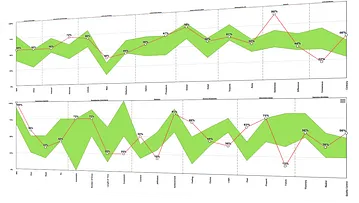
Tools like AccuMatch help map workplace behaviors, reveal cultural gaps, and guide targeted leadership action.
Self-assessments, dashboards, and structured tracking turn insight into execution.
Final Thought: Behavior Compounds Into Culture
Leadership doesn’t change overnight.
But small, consistent behavioral shifts—tracked and reinforced—compound into trust, engagement, and performance.
Consistency beats intensity.
Behavior, practiced daily, becomes culture.
Ready to Build Your Own Integration Blueprint?
If you’re ready to turn leadership insight into measurable impact:
Explore the Leadership Intelligence resources
Complete a behavioral self-assessment
Work with a certified Behavior Intelligence coach
Apply for certification and deepen your practice
Leadership excellence isn’t about knowing more—it’s about doing better, consistently.
Learn more. Apply now. Begin the integration.




Copyright 2021 AccuMatch Behavior Intelligence is a division of NLP Profiles Inc. | Privacy Policy